The IATA new-distribution-capability adoption stat, in context.
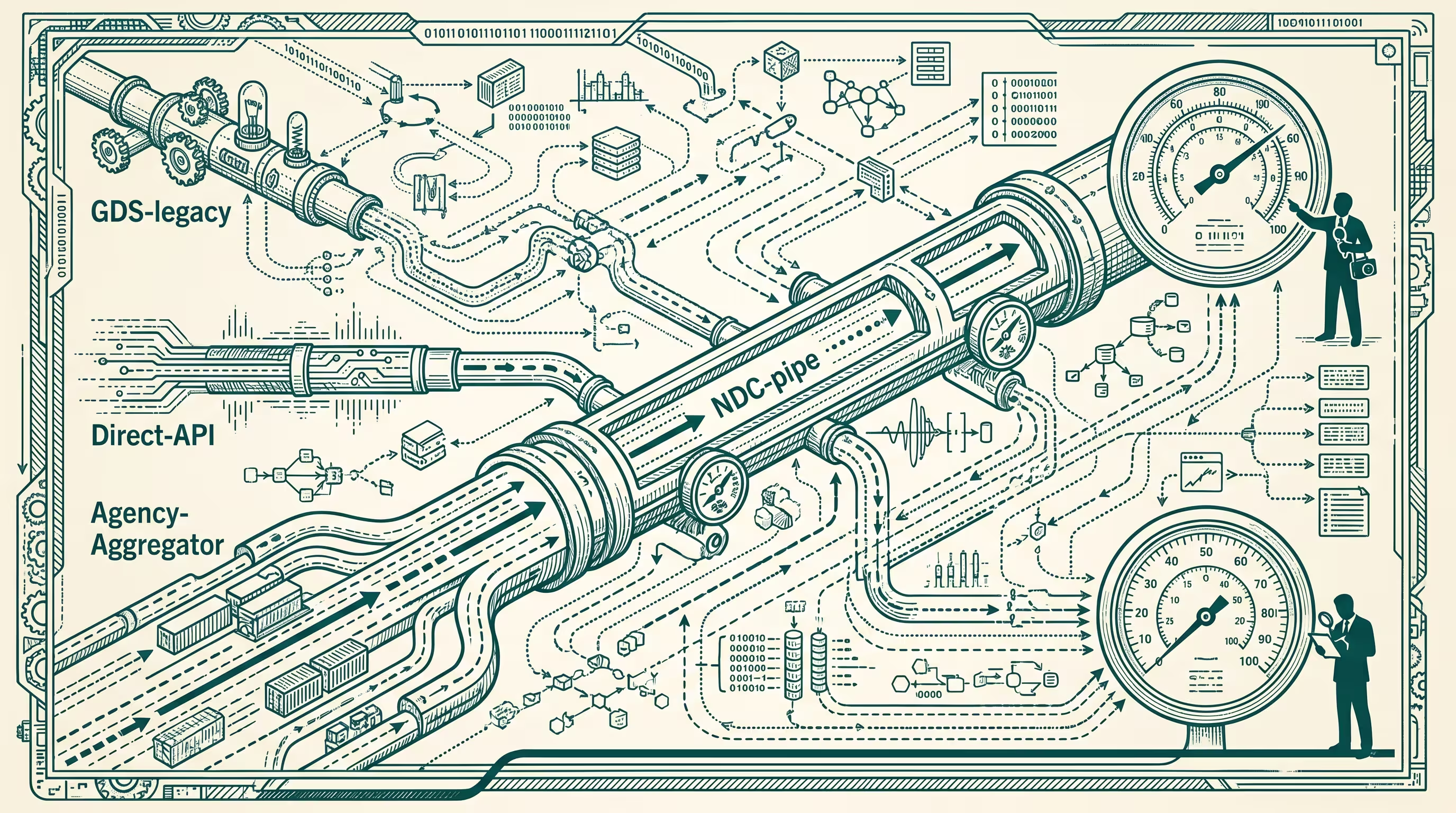
IATA publishes a New Distribution Capability adoption number at a regular cadence, and the airline-distribution press treats it as the headline indicator of whether the standard is winning. The number is presented as the share of indirect ticketing volume that flowed through an NDC-certified channel rather than the legacy EDIFACT-over-GDS path. The most recent reading I have seen has the figure in the high twenties as a percentage. The press writes that up as evidence the standard is taking hold.
The number is not wrong. It is the wrong number for the question.
Channel volume is the easy thing to count. Each NDC-certified booking has a clear marker in the routing data, and IATA can roll up the share without any ambiguity. The trouble is that channel volume tells the operator very little about whether the underlying distribution architecture has actually changed. The same booking flowing through an NDC channel can be functionally identical to the EDIFACT booking it replaced. Same fare bucket, same seat assignment, same ancillary upsell pattern, same revenue split between airline and intermediary. If the channel is new but the function is unchanged, the headline number is measuring the migration of a wire format rather than the shift the standard was supposed to enable.
The shift the standard was supposed to enable is rich-content distribution. The airline ships a fare bundle that is not just a price and an inventory class but also a bag allowance, a seat selection, a meal, a Wi-Fi voucher, a flexibility option, a co-marketed product, a loyalty accrual, all priced as a coherent offer. The travel agent or corporate-booking tool surfaces that offer to the buyer in a way the EDIFACT pipe could not represent. The buyer chooses. The transaction reflects the rich-content choice rather than a flat fare-class booking.
The fraction of NDC volume that actually carries rich-content payload (bundled offers, dynamically priced ancillaries, segmented merchandising) is much smaller than the headline channel-share number. The operator-level read, from the conversations I have inside the larger TMC and OTA platforms, places it at roughly a third of the channel-NDC share, which puts the rich-content NDC fraction in the high single digits as a share of total indirect volume. That is the figure that should be in the headline.
The reason this matters is that the strategic question for an airline-distribution leader is not whether bookings are flowing through the new wire format. The strategic question is whether the new format is being used for the merchandising the format was designed to enable. If the answer is no, the migration is a costly re-platforming exercise that produced no commercial change, and the airline that pushed it hardest is the one that should be most worried about whether the spend was justified.
If the answer is partially yes, which is the actual answer, the next question is which routes, which booking channels, and which corporate accounts are accepting rich-content payloads in production rather than translating them back to flat-fare equivalents inside the agent's own pricing engine. That answer points at where the standard is durably taking hold and where it is being passed through as a wire-format migration with no merchandising signal.
The press write-up that takes the headline IATA number at face value misses this entirely. The write-up treats the channel-share figure as a verdict on the standard. The operator-level read treats it as a leading indicator of a migration that is necessary but not sufficient — and the merchandising-share number as the lagging indicator that tells you whether the migration earned its keep.
NDC is winning in a narrow and specific sense. The wire format is being adopted. The merchandising layer is being adopted at perhaps a third of that pace, in a smaller set of channels and corporate relationships. The places where the merchandising layer is taking hold are the places where the standard delivers the commercial value the original case promised. The rest is a slow re-platforming that may or may not produce the second-order effect the original case required.
The headline number is the wrong number to read. The merchandising-share number is the right one. IATA does not publish it, and the trade press does not pull it from the operator-level sources that have it. That is a gap the next year of distribution coverage should close.
—TJ