IBM replaced hundreds of HR staff with AI and confirmed the back-office pattern is structural, not experimental.
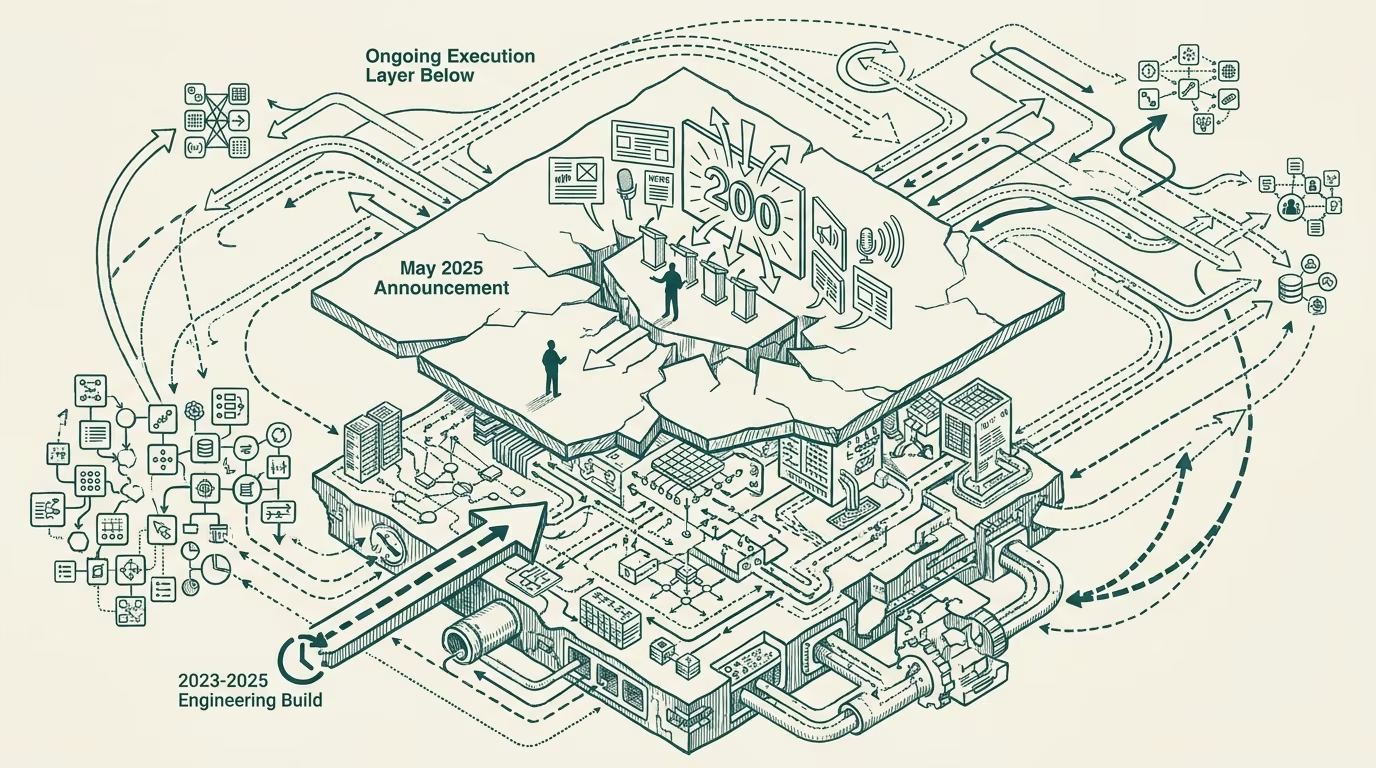
IBM's May 2025 public confirmation that its internal AskHR AI deployment had absorbed roughly 200 HR roles over the 2023-2025 build period is the enterprise-scale confirmation that back-office AI replacement is no longer experimental. The pattern is structural. The deployment timeline runs on a recognizable shape: slow build, fast announcement, slower-than-announced execution. The IBM case is one of the cleanest publicly-documented instances of the pattern at the substantive scale.
The slow-build phase ran from 2023 through 2024-2025, with substantial engineering investment in the AskHR product, integration work with the company's HR-systems environment, and the broader operational-deployment work that the production-grade AI deployment requires. The build was not visible in the company's public communications during this phase, with the visible HR commentary being more conventional cost-and-efficiency framing.
The fast-announcement phase came in May 2025, when the CEO publicly framed the deployment as having absorbed roughly 200 HR roles. The framing was substantive and operationally meaningful, but the announcement compressed several years of engineering-and-deployment work into a single press-event narrative.
The slower-than-announced execution phase is the part the operator-class working with similar deployments should attend to most carefully. The IBM case included substantial commentary about reinvestment in other roles, with the company hiring engineering and product talent that the AI-driven HR savings funded. The broader headcount pattern was net-positive even with the HR-specific reduction. The "AI replaced 200 HR roles" framing is true at the role-specific level and incomplete at the company-headcount level. The execution that the announcement implied at the surface level was more nuanced when read carefully.
The pattern generalizes. The back-office AI replacement that the major enterprises are running through 2024-2026 follows the same shape across multiple categories. Slow-build through the engineering-and-deployment phase. Fast-announcement when the deployment reaches the milestone the public-communications team can frame. Slower-than-announced execution as the actual operational consequences play out across the broader headcount and the company's continued investment in adjacent categories.
The Salesforce Agentforce deployment trajectory is the next chapter at the platform-tier level. The platform-tier vendor deploying agentic-AI capability across the customer-base produces the same shape on a different scale. Slow build through the platform-engineering-and-customer-deployment work. Fast announcement when the platform reaches the deployment-volume milestone the marketing team can frame. Slower-than-announced execution as the actual operational consequences across the customer-class deployments play out over the multi-year deployment cycle.
For the operator-level watching this trajectory, the practical advice is to read the announcements against the deployment-timeline pattern rather than against the headline framing. The IBM case is instructive because the headline ("200 HR roles") was less misleading than many similar announcements have been. Other companies running the same pattern with less rigorous announcement framing have produced more substantial gaps between the framing and the execution.
For investors evaluating AI investments in companies running back-office replacement, the read suggests the deployment pattern is durable enough to plan against. The companies that have completed the slow-build phase produce the operational savings; the companies that have not are still at earlier stages of the pattern. The investment-class diligence should attend to the build-phase progress rather than to the announcement-phase headline.
Back-office AI replacement is structural. The pattern is recognizable. The IBM case confirmed it at substantive scale. The next several years will produce additional confirmations at progressively-larger scales. Operators reading the pattern carefully will produce better deployment-and-investment outcomes than operators reading only the announcements.
—TJ